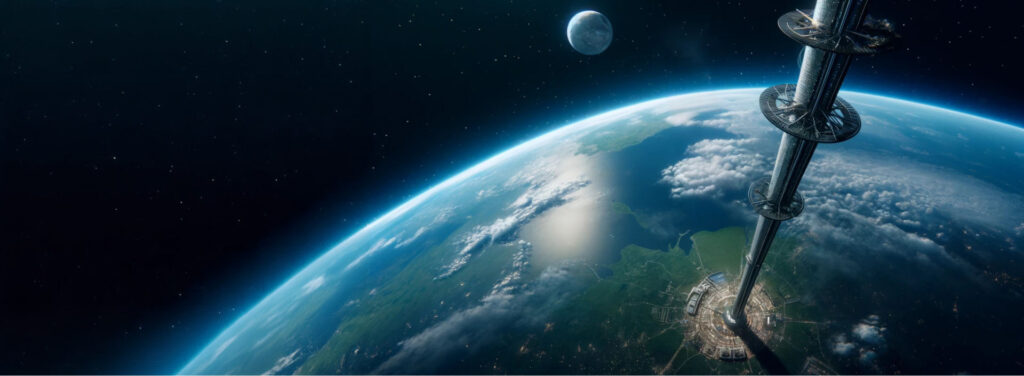
Humans have always been driven by a deep sense of curiosity and a desire to explore the unknown. Space represents the final frontier, an endless expanse filled with mysteries waiting to be uncovered. The urge to explore space stems from our innate curiosity about what lies beyond our planet, what other worlds might exist, and whether life could be sustained elsewhere.
Beyond curiosity, the desire to be in space is also fueled by the challenge it represents. Space exploration requires overcoming immense technical, physical, and mental challenges, making it one of the most difficult and rewarding pursuits in human history. The process of solving these challenges leads to technological advancements that have far-reaching benefits for life on Earth.
Space also represents an opportunity for survival and the continuation of the human species. As the Earth faces various environmental challenges and potential existential threats, such as asteroid impacts or climate change, space offers a potential refuge. Establishing colonies on other planets or moons could ensure that humanity survives even if life on Earth becomes unsustainable.
Another reason humans are drawn to space is the pursuit of knowledge and the potential for scientific discovery. Space exploration allows us to conduct experiments in environments that are impossible to replicate on Earth, such as microgravity or the vacuum of space. These experiments can lead to breakthroughs in various fields, including medicine, physics, and materials science.
Finally, the desire to be in space is rooted in a sense of wonder and the quest for a greater understanding of our place in the universe. Space exploration allows us to contemplate the vastness of the cosmos, the potential for other intelligent life forms, and the interconnectedness of all things.